Most websites stop at the contact form. The enquiry lands in an inbox, and what happens next depends on who sees it and when. An enquiry journey sets those steps in advance.
What the form should ask for
Only what you need to reply. If you do not need a phone number to answer the question, do not demand one.
The less you collect, the less you have to look after. Say beside the form what the details will be used for.
What should happen the moment someone presses send?
They should get an acknowledgement that says what happens next and when. “Thanks, we will be in touch” tells them nothing.
Better: “We have your message. You will get an email from us by 5pm tomorrow.” Show it on screen and send it by email. Only promise a reply time you can keep in your busiest week.
Where the enquiry should go
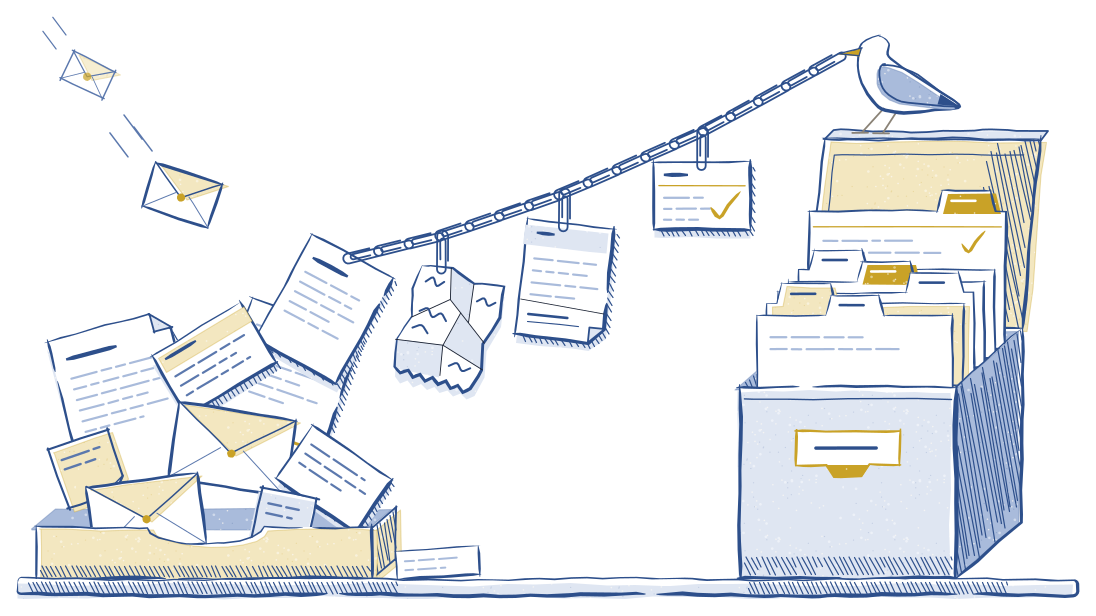
Onto one list with a status, never only into an inbox. An email opened on a phone between jobs is marked as read and easily forgotten.
The list marks each enquiry with a status, such as new, replied, waiting or closed. Give one named person the job of keeping it moving. Anyone covering can see where things stand, and only the people who reply need access.
A website with a journey puts every enquiry on that list as it arrives.
How quickly should you reply?
As quickly as you can reliably manage. Research published in Harvard Business Review in 2011, “The Short Life of Online Sales Leads”, found that most companies were not responding to online enquiries nearly fast enough.
It is an older study of US companies, so treat it as a pointer. Set a reply time, publish it and keep to it. Checking the list at fixed times, such as first thing and after lunch, makes that easier.
How many times should you follow up?
More than once, by the channel the person chose. People get busy and miss a first reply.
A “waiting” status with a date beside it prompts a second message. Keep it short and repeat your answer, in case the first went to junk. Stop when they say no.
Can everyone who enquires go on your mailing list?
No. Only people who ticked a separate marketing opt-in belong there. A reply to an enquiry is a service message. Under UK GDPR and PECR, marketing messages generally need the opt-in.
Leave the box unticked, and keep a record of the wording each person saw. That is general information, not legal advice.
Forms people start and never send
They can go on an unfinished-enquiries list, on terms set out in your privacy notice. Someone who typed half a quote request wanted something.
Ask whoever advises you on data protection to check the wording before you switch it on.
How to know which marketing brought the enquiry
Record where each enquiry came from as it arrives. An enquiry from a search and one from a social post look identical in an inbox.
With the source on the list, you can judge marketing on enquiries instead of likes. At the end of the month, count enquiries by source, then count how many became customers.
A marketing plan should be built on that record.
What that looks like for one enquiry
Seven small steps, none of which relies on memory. Here is a made-up example: a joiner in Buchan with a quote form.
- Sunday evening. A homeowner asks for a price on a new staircase.
- Straight away. An email confirms the request and says the joiner will reply by Tuesday.
- Monday. The joiner sees it on the follow-up list as “new”, marked “found by search”.
- Tuesday. The joiner replies and the status changes to “waiting”.
- A week later. No answer yet, so the joiner sends one polite reminder.
- Throughout. The homeowner left the opt-in unticked, so they get replies and no newsletters.
- End of the month. The joiner counts enquiries by source and sees what the marketing brought in.
What to do next
Send a test enquiry through your own form and see what comes back. If the answer is not much, ask for a free website review or book a discovery call.